


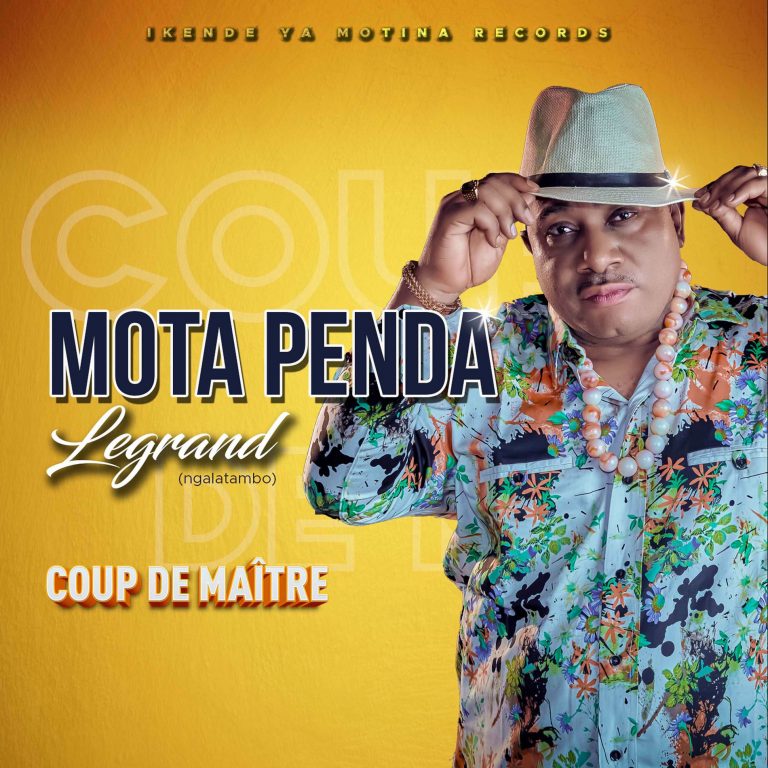
Cameroonian youth, between the ages of 18 and 30, continue to groove to the rhythm of Makossa, the musical genre that has shaped the country’s cultural identity. In our recent survey, 60% of young respondents mentioned the same name as the one who makes them dance and lose themselves on the floor:
Mota Penda Legrand.
Mota Penda Legrand: A Life Dedicated to Music
Born Emmanuel Penda Wokonyi, Mota Penda Legrand hails from the village of Sanje, on Cameroon’s west coast. Passionate about music since the age of five, he crafted his own instruments from tin cans, umbrellas, and pieces of wood, leading a small children’s orchestra. Today, he boasts over 30 years of experience as a singer, composer, guitarist, and music director.
His goal?
To revive Makossa and make it shine in a modernized form while staying true to its roots. His collaborations pay tribute to the legendary pioneers such as Petit Pays, Penda Dallé, and the icons of the 1980s, Sallé John, Dina Bell, and the Decca family (Grace, Ben, and Dora), who once set homes and dance floors across the nation ablaze.
Makossa Today: Dance Floors That Still Vibrate
Young people don’t just listen to this music, they live it. On Friday and Saturday nights, the Mermo Nightclub in Bonamoussadi, Douala, becomes the temple of modern Makossa. Open from 7 p.m. to 6 a.m., the club hosts nights filled with Makossa, Mbolè, and Cameroonian R&B. Here, the youth let go of their worries and surrender to the rhythm of their new idols, led by Mota Penda Legrand.
Makossa is not just a style of music; it is a celebration : a cultural heritage passed down through generations.
Thanks to artists like Mota Penda Legrand, this iconic rhythm is reclaiming its place on dance floors, rekindling the memories of the old while electrifying the new generation.
A Bridge Between Past and Present
Cameroon needs moments of relief, and music is a powerful way to achieve that. Balancing tribute and innovation, Makossa continues to unite, move, and inspire.
With Mota Penda Legrand and the new wave of Cameroonian singers, the message remains clear:
To dance and to celebrate, all it takes is a rhythm, a melody, and a dance floor ready to welcome both bodies and hearts.

