


France likes to present itself as a land of Liberty, Equality, and Fraternity.
But for millions of Africans and for many Black and Arab people living in France, the reality is far more complex… and far more brutal.
Let us be clear:
This article is not written to provoke hatred.
It is written to provoke awareness.
A Country Torn Between Principles and Practice
France rejects foreigners… until the day it needs them.
Laborers.
Artists.
Athletes.
Researchers.
Entrepreneurs.
When they serve the economy or enhance the image of the country, they are tolerated.
When they succeed “too much,” speak “too loudly,” or disrupt the established order, they suddenly become a problem.
This is not an opinion.
It is a documented contradiction.
When Success Becomes Suspicion
Many members of the African diaspora in France know this reality all too well:
Success can become a danger.
The moment a Black or Arab individual rises socially, financially, or publicly, suspicion follows.
- Hasty accusations
- Biased headlines
- Rumors amplified without serious investigation
Some media outlets, particularly popular ones, have at times favored sensationalism over rigor, at the expense of the presumption of innocence, like Le Parisien.
And when accusations collapse?
The damage is already done.
Freedom of Expression : For Whom?
France proudly invokes freedom of expression.
Yet that freedom often appears selective.
When certain media stigmatize, caricature, or defame, it is defended as “the right to inform.”
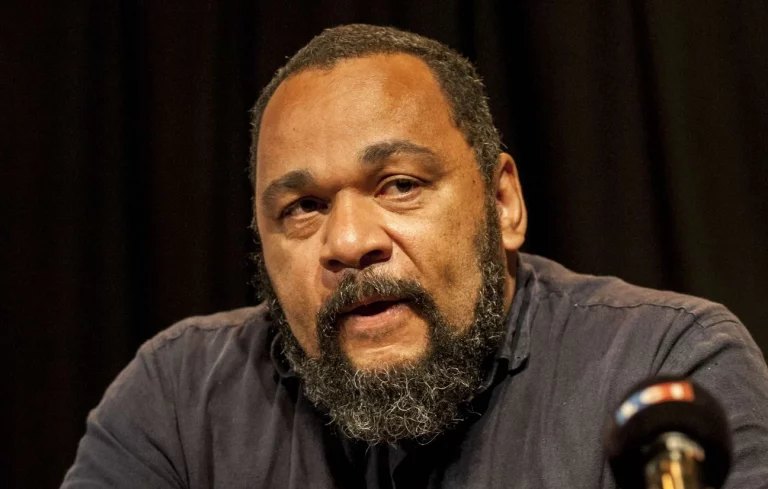
When a Black Cameroonian comedian like Dieudonné speaks, platforms close, sanctions fall, and debate disappears.
The question must be asked openly:
Is freedom of expression truly the same for everyone in France?
The Silence That Hurts the Most
What shocks the Cameroonian diaspora in France is not only symbolic violence.
It is the silence.
- The silence of institutions
- The silence of justice when accusations prove unfounded
- The silence of parts of the media establishment
- And sometimes, the silence of the diaspora itself, paralyzed by fear of retaliation or marginalization
Silence, in this context, becomes a form of participation.
A Cry, Not a Threat
Let this be clear:
This text is not a declaration of war.
It is a cry of alarm.
The cry of a Black, African, Cameroonian youth saying simply:
“We refuse to be treated as second-class citizens.”
The era of silent submission is over.
Not through violence.
But through speech.
Through law.
Through intelligence.
Through solidarity.
A Direct Question to France
France must ask itself a fundamental question:
Does it truly wish to live up to the values it proclaims?
Because one cannot:
- Celebrate diversity
- While tolerating stigmatization
- Invoke freedom
- While restricting it based on who is speaking
Principles cannot be selective.
Cameroon and Its Diaspora: One Voice
Cameroon, like many African nations, does not ask for charity.
It asks for respect.
Its diaspora is neither a problem nor a threat.
It is a human, intellectual, and cultural asset.
To continue ignoring this reality is to deepen division.
Telling the Truth Is Not a Crime
This article is deliberately raw.
Because reality is raw.
As major international newspapers have often reminded us:
The role of journalism is not to comfort power, but to challenge conscience.
Cameroun Liberty will continue to speak.
Without hatred.
Without lies.
But without fear.
Because it is time certain truths are finally faced.

